Committed to Eye Care with Compassion, Technology and Competency

Committed to Eye Care with Compassion, Technology and Competency
2/18/2026
Contact lenses can be life-changing. They give you clear vision without frames, fit easily into busy routines, and often feel invisible, when everything is right. But if you’ve ever dealt with dryness, redness, or that constant urge to take your lenses out early, you already know something important: comfort isn’t just about your prescription.
Two things make a huge difference in how your eyes feel day after day, contact lens fit and contact lens material. Whether you wear lenses every day, are trying them for the first time, or keep struggling with contact lens discomfort, understanding the basics and avoiding these common contact lens Mistakes can help you protect your eyes for the long run.
Contact lenses sit directly on the surface of your eye, resting on the cornea. Because no two eyes are shaped exactly the same, lenses need to fit your eyes, not just match your prescription. A well-fitted lens moves slightly when you blink. This movement allows oxygen and tears to circulate, keeping your eyes healthy and comfortable. When the fit isn’t right, your eyes feel it pretty quickly.
If lenses are too tight, they can limit oxygen flow and feel stuck in place.
If they’re too loose, they may shift around, causing blurry vision and irritation.
Over time, a poor contact lens fit can lead to:
If your lenses never quite feel “right,” it’s not something you should just get used to.
Fit is only half the story. The contact lens material also plays a big role in how comfortable your lenses feel and how your eyes handle long hours of wear. Most people today wear soft contact lenses, though some still use rigid gas permeable (RGP) lenses for specific vision needs. The material affects how much oxygen reaches your eyes, how well moisture is held, and how your lenses feel by the end of the day.
Hydrogel lenses are soft, flexible, and comfortable right from the start.
Why people like them:
Things to consider:
They can work well if you wear lenses occasionally or for shorter periods.
Silicone hydrogel lenses are now the most commonly recommended option, and for good reason.
They allow significantly more oxygen to reach the eye, making them better suited for daily and extended wear. Many people notice less dryness and better comfort throughout the day. For anyone wearing contacts regularly, this material often provides a healthier experience.
Your eyes need oxygen to stay healthy, especially the cornea, which doesn’t have its own blood supply. When lenses block oxygen, your eyes can become stressed over time.
Low oxygen exposure may lead to:
If you have sensitive eyes or struggle with eye dryness, choosing the right lens material isn’t just about comfort, it’s about protecting your eye health long-term.
Your eyes usually give you clear signals when something isn’t working. Pay attention if you notice:
If these issues keep happening, it’s time for an eye exam. Contacts should feel comfortable, not like something you’re constantly aware of.
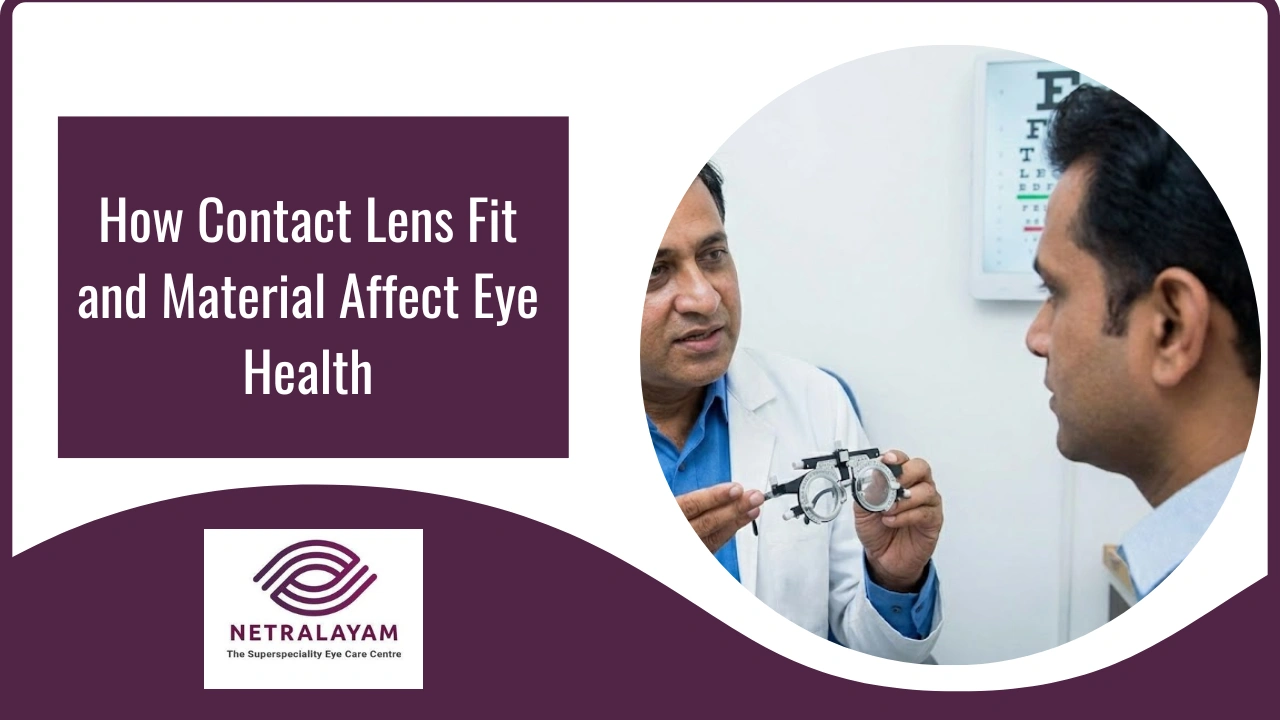
Contact lenses aren’t one-size-fits-all. A proper fitting includes more than just checking your vision. Your eye care provider looks at your eye shape, tear quality, and even your daily routine. They’ll consider how long you wear lenses, how much screen time you have, and whether dryness or allergies are an issue. Regular follow-ups help catch small problems early, before they turn into bigger ones.
A few good habits can make a big difference:
These small steps help keep your eyes comfortable and reduce the risk of infections.
Wearing contact lenses should feel easy and comfortable. The right contact lens fit and contact lens material work together to keep your eyes healthy, clear, and irritation-free.
If your lenses don’t feel as comfortable as they should, don’t ignore it. A professional eye exam can help you find a better fit and material, so your eyes stay healthy for years to come.
Struggling with uncomfortable or dry contact lenses? At Netralayam, we make sure your lenses fit perfectly and use the right material for your eyes. Enjoy clear vision and all-day comfort while keeping your eyes healthy.
Book your lens fitting today and give your eyes the care they truly need.
Using lenses with poor oxygen flow or low moisture retention can increase irritation and dryness, creating a higher risk of eye infections over time.
Contact lens fit should typically be evaluated at least once a year, or sooner if discomfort, redness, or vision changes occur.
With the right material and proper fit, lenses can be worn comfortably, though careful monitoring and professional guidance are essential for sensitive or allergy-prone eyes.
Thicker lenses can reduce oxygen flow and feel less comfortable, potentially causing dryness or blurred vision, especially during extended wear periods.
Improperly fitted or long-wear lenses may temporarily alter corneal shape, highlighting the importance of regular check-ups to maintain healthy eyes.

Comments are closed