Committed to Eye Care with Compassion, Technology and Competency
Committed to Eye Care with Compassion, Technology and Competency
3/20/2026
When it comes to your eyes, what you can’t see can be the most dangerous. Conditions like glaucoma and macular degeneration often progress quietly, without pain or obvious symptoms. By the time you notice a blur, a dark spot, or difficulty focusing, permanent damage may already be underway.
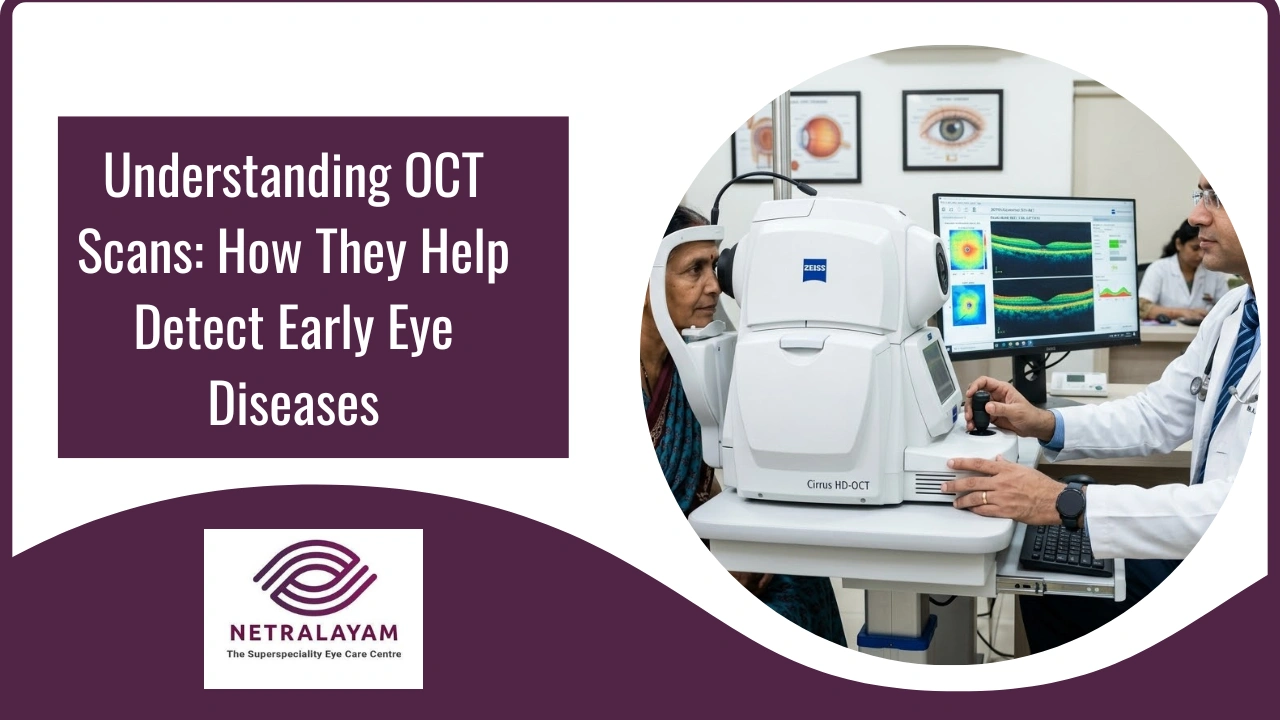
Optical Coherence Tomography, or OCT, changes the way eye specialists detect these problems. Using advanced light-based imaging, it provides a detailed, cross-sectional view of the retina and optic nerve, revealing subtle changes long before they affect your vision. For patients, it means problems can be caught early, treatments can begin sooner, and vision can be preserved.
Find out how modern eye care uses OCT scans to preserve vision and prevent irreversible damage.
OCT stands for Optical Coherence Tomography. It works similarly to ultrasound but uses light waves instead of sound. The machine reflects light off different layers of the retina, producing a high-resolution, cross-sectional image. This detailed view allows doctors to see tiny changes that might otherwise go unnoticed.
Unlike standard eye exams that test vision clarity or photographs that capture the surface of the retina, an OCT test in ophthalmology provides a layered, structural view of the retina, macula, and optic nerve. This makes it a powerful tool for early diagnosis and treatment planning.
OCT scans can identify changes before symptoms appear, which is crucial for preventing vision loss. The test provides:
By providing this level of detail, OCT scans often detect eye diseases years before vision is affected.
An OCT scan is quick, painless, and non-invasive. Here’s what patients can expect:
The procedure usually takes 5–10 minutes per eye. In most cases, no eye drops or dilation are required, and you can resume normal activities immediately.
OCT is recommended for people at higher risk of eye disease, including:
Regular OCT scans allow doctors to detect problems early, even in patients with no symptoms.
OCT scans allow doctors to:
This level of monitoring is especially important for chronic conditions that can worsen silently.
OCT is non-invasive and radiation-free, making it safe for repeated use. It is suitable for most age groups, including children, adults, and seniors. There is no discomfort or known side effect associated with the scan.
OCT provides a detailed, layered view of the retina, unlike fundus photography, which captures a 2D surface image. While routine eye exams detect general vision problems, OCT reveals structural changes at a microscopic level. Together, these tests provide a comprehensive picture of eye health.
If you experience blurred vision, eye pressure, floaters, or other unexplained changes, consult an ophthalmologist. Early evaluation with OCT ensures problems are detected before they affect vision and enables effective, timely treatment.
Your eyes deserve attention long before symptoms appear. With OCT scans, subtle changes in the retina and optic nerve can be detected early, giving you the chance to protect your vision and maintain your quality of life. Regular check-ups, timely imaging, and proactive care allow eye specialists to intervene before problems escalate, turning silent threats into manageable conditions and preserving the sight you rely on every day.
Worried about silent eye conditions that show no early symptoms? At Netralayam, advanced OCT scans reveal subtle retinal and optic nerve changes before vision is affected. Whether you need routine screening or closer monitoring, get accurate insights without discomfort or delay.
Book your personalized OCT consultation today.
An OCT scan is completely painless and non-contact. It uses light waves to capture images, without touching the eye or causing discomfort.
The scan usually takes about 5 to 10 minutes per eye, making it a quick and convenient part of a comprehensive eye examination.
Pupil dilation is not always required. In some cases, eye drops may be used to obtain clearer images, depending on clinical needs.
The frequency depends on individual risk factors and eye conditions. Your eye specialist will recommend a schedule based on monitoring or treatment needs.
Comments are closed